

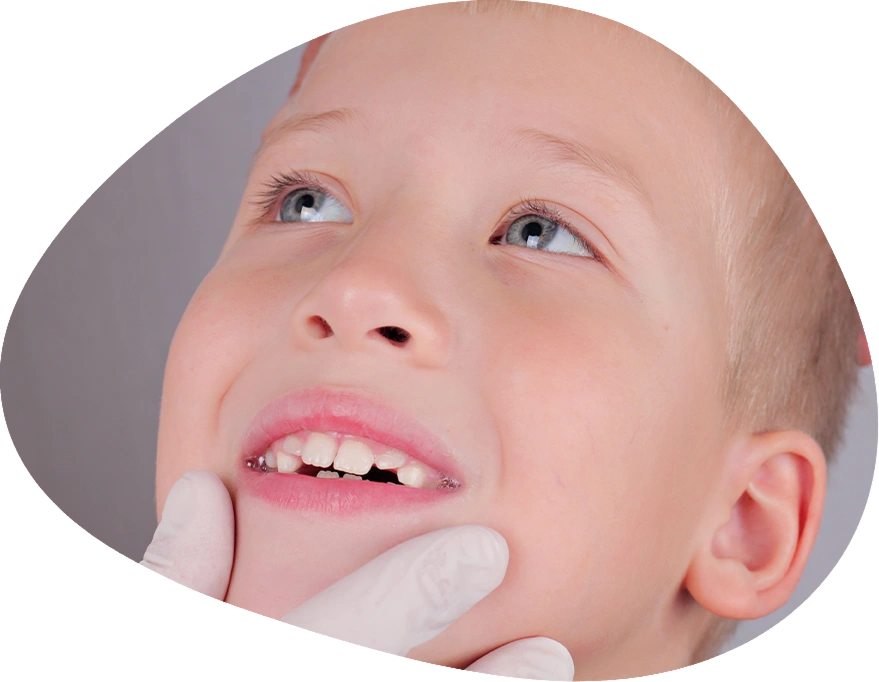
Orthodontic problems can affect much more than the appearance of your smile. The way your teeth and jaws fit together can influence chewing, speech, tooth wear, oral hygiene, and overall function.
At Beyond Smiles Orthodontics in Syosset, Dr. Isaak Yelizar evaluates the entire bite to understand what is happening, why it may be happening, and whether orthodontic treatment can help. From crowded teeth and unwanted spaces to more complex bite and jaw concerns, treatment is planned around the individual problem rather than simply making the teeth look straighter.
Below are some of the most common orthodontic issues we evaluate and treat.
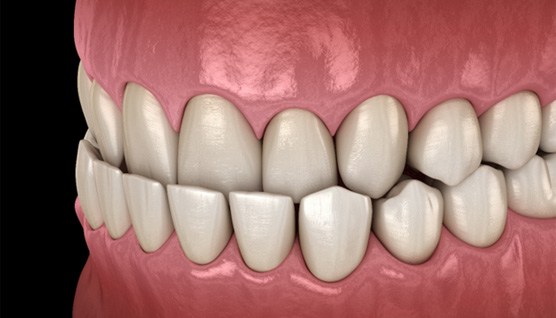
An underbite occurs when the lower front teeth sit in front of the upper front teeth when the mouth is closed. In some patients, the problem is primarily related to tooth position. In others, the size or position of the upper and lower jaws may play a larger role.
Depending on its severity, an underbite can affect chewing, tooth wear, facial balance, and the way the jaws function together.
Because jaw growth can be an important part of an underbite, evaluating younger patients while they are still developing can be particularly valuable.
Some vertical overlap between the upper and lower front teeth is normal. A deep overbite occurs when the upper front teeth overlap the lower teeth excessively.
In more significant cases, the lower teeth may contact the tissue behind the upper front teeth, or the bite may contribute to uneven tooth wear and other functional concerns.
Orthodontic treatment can help improve the relationship between the upper and lower teeth and create a more balanced bite.
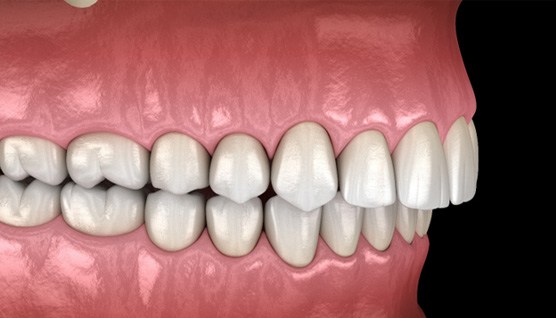
Teeth do not always erupt perfectly straight. Individual teeth may be tilted, rotated, overlapping, or positioned outside the ideal dental arch.
Crooked teeth can develop for many reasons, including genetics, available space within the jaws, early loss of baby teeth, eruption patterns, and other developmental factors.
Beyond appearance, significant misalignment can create areas that are harder to brush and floss effectively and may affect how the upper and lower teeth come together.
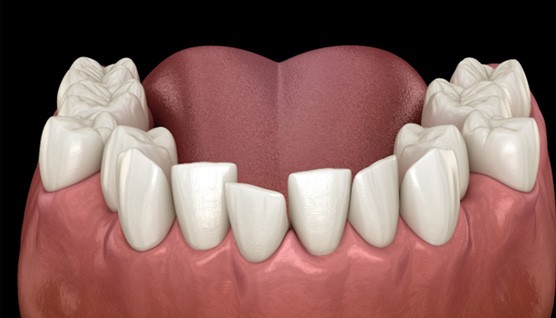
An open bite occurs when some of the upper and lower teeth do not make contact when the mouth is closed. One common pattern is an anterior open bite, where the back teeth meet but a visible space remains between the upper and lower front teeth.
Open bites can be associated with several factors, including jaw growth patterns, prolonged thumb or finger habits, tongue posture, and other developmental influences.
Depending on the cause and severity, an open bite may interfere with biting into foods, speech, and normal bite function.
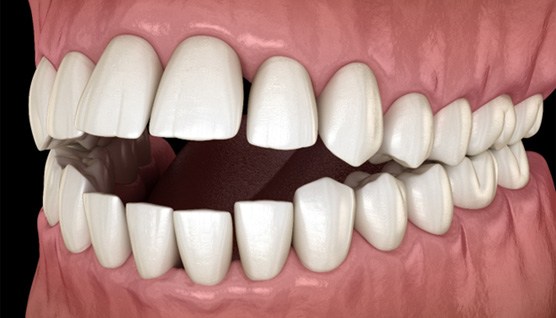
An impacted tooth is one that has not erupted normally into the mouth. Instead, it may remain partially or completely beneath the gum or become blocked by another tooth or surrounding structure.
Impacted teeth are often identified through dental X-rays or other imaging before they cause obvious symptoms.
Canine teeth are among the teeth that orthodontists commonly evaluate for impaction. Depending on the situation, treatment may involve creating space and working with another dental specialist to help guide the tooth into its appropriate position.
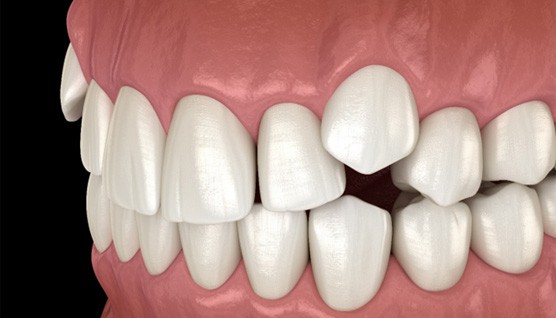
Dental crowding occurs when there is not enough room within the dental arches for all of the teeth to fit comfortably in their ideal positions.
As a result, teeth may overlap, rotate, or erupt in front of or behind neighboring teeth. Crowding can range from relatively minor to severe.
Treatment depends on why the crowding developed and how much space is needed. Depending on the patient, options may include braces, clear aligners, expansion, or other orthodontic approaches.
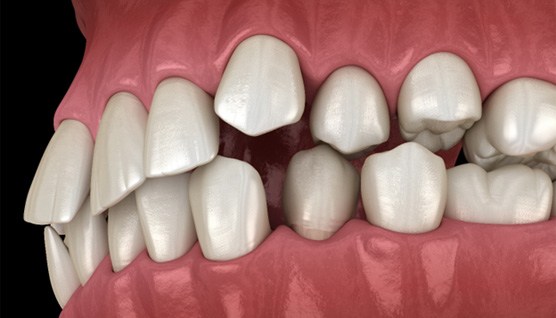
Spacing occurs when there is excess room between teeth. A patient may have a single noticeable gap or spaces throughout the dental arch.
Gaps can develop because of differences between tooth and jaw size, missing or undersized teeth, tooth position, or other factors.
Orthodontic treatment can often close unwanted spaces, but understanding why the spacing developed is important when planning a stable long-term result.
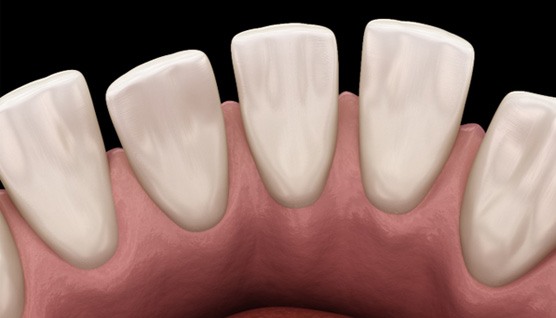
A crossbite occurs when one or more upper teeth bite inside the lower teeth rather than outside them. Crossbites can involve the front teeth, back teeth, or both, and may occur on one or both sides of the mouth.
In growing patients, certain crossbites may be associated with the width or development of the jaws. Others are primarily related to individual tooth position.
Identifying the type of crossbite helps Dr. Yelizar determine whether treatment should focus on moving teeth, addressing jaw development, or a combination of approaches.
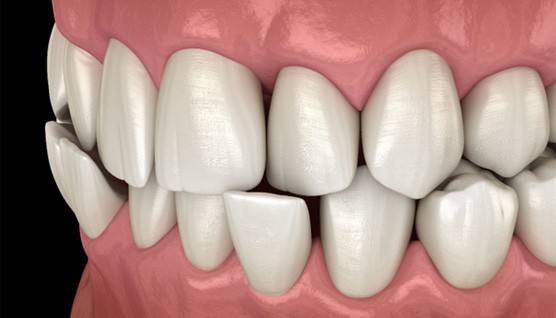
Overjet describes the horizontal distance between the upper and lower front teeth. Excessive overjet occurs when the upper front teeth project significantly farther forward than the lower front teeth.
This is different from an overbite, which describes vertical overlap.
Excessive overjet may be related to tooth position, jaw relationships, or a combination of both. More prominent front teeth can also be more vulnerable to accidental injury, particularly in active children.
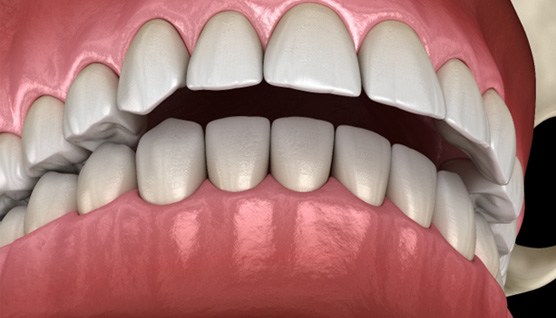
Most patients naturally want to keep all of their teeth, and so do we. However, there are situations where removing one or more teeth may be considered as part of a comprehensive orthodontic treatment plan.
Extractions may be recommended when there is severe crowding, significant tooth-size and jaw-size discrepancies, problematic tooth positions, or another situation where creating adequate space is necessary to achieve a healthy and stable result.
Extraction is not automatically required simply because teeth are crowded. Dr. Yelizar evaluates the complete bite, facial structure, available space, and treatment alternatives before recommending this approach.
Two patients can appear to have the same orthodontic problem but require very different treatment.
For example, crowded teeth might result from limited space within the dental arch, while an underbite could be caused primarily by tooth position in one patient and jaw development in another.
That is why an orthodontic diagnosis comes before choosing an appliance. Braces and clear aligners are tools. The treatment plan determines how those tools should be used to address the underlying problem.
The appropriate treatment depends on your age, tooth position, bite, jaw relationships, growth and development, and the complexity of the problem being corrected.
Depending on your individual diagnosis, Dr. Yelizar may recommend:
The goal is not to use the same treatment for everyone. It is to identify what needs to change and select an approach capable of producing a healthy, functional, and stable result.
You do not need to know whether you have an overbite, overjet, crossbite, crowding, or another orthodontic condition before coming to see us.
That is what the evaluation is for.
At Beyond Smiles Orthodontics in Syosset, Dr. Yelizar can examine your teeth and bite, explain what he sees in understandable terms, and walk you through the treatment options that make sense for you or your child.