

Airway Orthodontics • Syosset, NY
Your child’s teeth, jaws, tongue, palate, and breathing patterns are all connected. At Beyond Smiles Orthodontics, we consider the complete picture when planning orthodontic treatment.
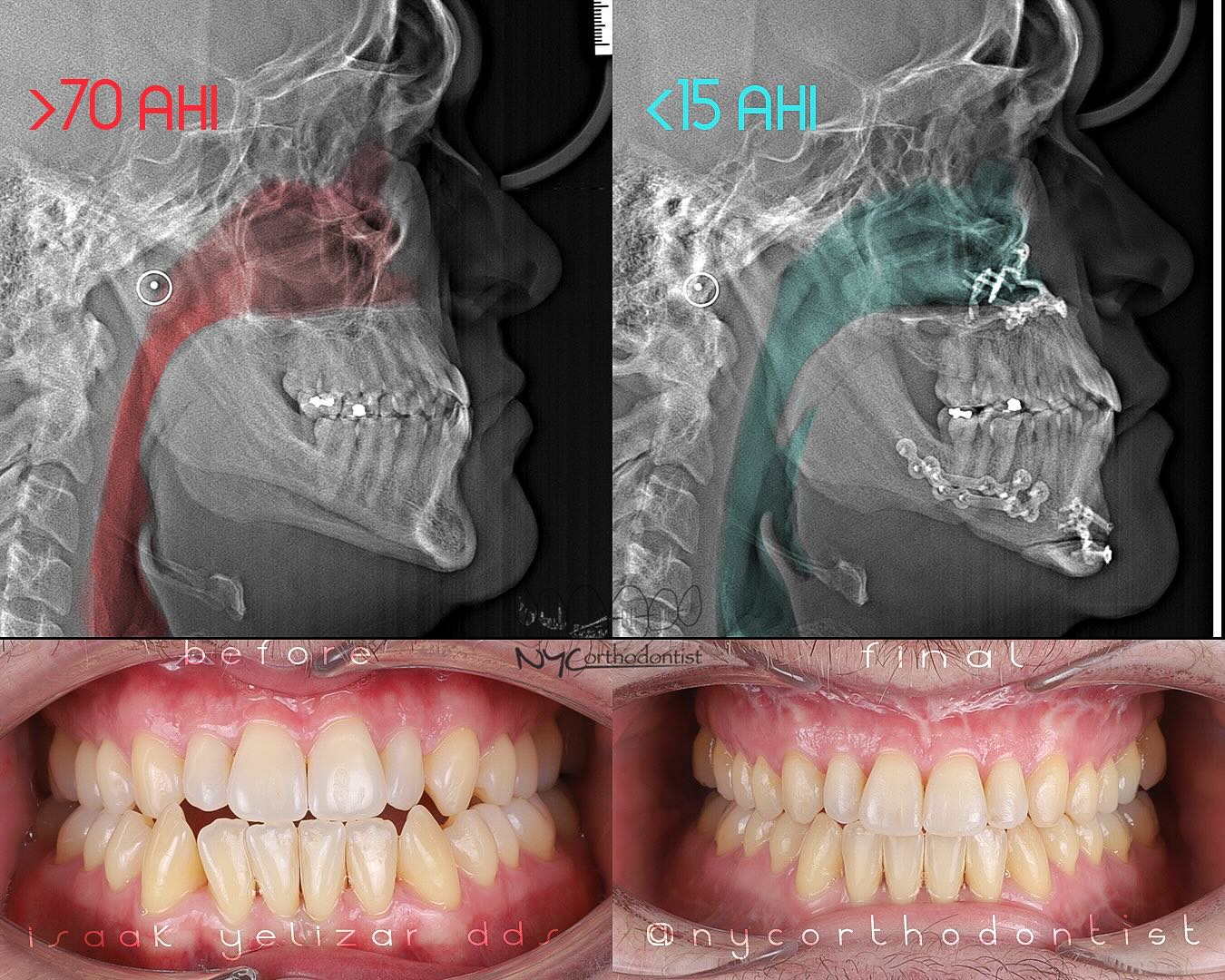
Airway-focused orthodontics is not a separate type of braces. It is a way of looking at the complete relationship between the teeth, jaws, tongue, palate, facial development, and airway when evaluating a patient.
For many patients, orthodontic treatment is primarily about correcting tooth alignment and the bite. For others, we may identify a narrow upper jaw, unusual tongue posture, chronic mouth breathing, or other developmental patterns that deserve additional attention.
Rather than looking at crowded teeth in isolation, we want to understand why the crowding developed and what else may be happening structurally.
That can lead to a more complete orthodontic treatment plan and, when necessary, collaboration with other healthcare providers.
Parents do not need to diagnose an airway problem themselves. Many of the signs that lead families to ask us about airway orthodontics can have several different causes.
However, it may be worth discussing your child’s development with us if you regularly notice things such as:
Seeing one of these signs does not necessarily mean your child needs orthodontic treatment or has a breathing disorder. It simply gives us more information to consider during a comprehensive evaluation.
There is only so much room available for the teeth and tongue within the mouth.
When the upper jaw develops too narrowly, there may not be enough space for the permanent teeth to erupt into healthy positions. A narrow upper arch can contribute to crowding, crossbites, and other orthodontic problems.
The palate also forms the floor of the nasal cavity, which is one reason we consider nasal breathing and palate development together when evaluating growing patients.
The goal is not simply to make room for straighter teeth. When appropriate, orthodontic treatment during growth can help guide the development of the jaws and create a healthier foundation for the bite, smile, and surrounding oral structures.
How a child habitually breathes can influence the resting position of the lips and tongue.
Ideally, the tongue rests against the palate while the lips remain comfortably closed and breathing occurs through the nose. Children who chronically breathe through their mouths may develop a different resting posture.
There are many possible reasons for mouth breathing, including allergies, enlarged tonsils or adenoids, nasal obstruction, and habit. An orthodontist cannot diagnose every underlying cause.
What we can do is identify orthodontic and developmental patterns that may be associated with these concerns.
If we see something that should be investigated outside of orthodontics, we can recommend that your family speak with the appropriate pediatrician, ENT, sleep specialist, or other healthcare provider.
For certain growing patients, a narrow upper jaw can be treated with a palatal expander.
Rather than simply moving individual teeth outward, expansion is designed to increase the width of the upper arch during development. This can create additional room for the teeth and help correct problems such as crossbites and significant arch constriction.
Because the upper palate also forms the floor of the nasal cavity, changes to the width of the upper jaw can affect the surrounding anatomy as well.
That does not mean every child who mouth breathes needs an expander, nor should palate expansion be viewed as a standalone treatment for sleep apnea.
The decision to expand the palate should be based on the individual child’s orthodontic diagnosis, stage of development, jaw structure, and overall needs.
Timing matters when we are dealing with a growing face.
Children’s jaws are still developing, which can give an orthodontist opportunities to guide growth that may become more difficult once skeletal development is complete.
This does not mean every child needs early orthodontic treatment.
Sometimes the best recommendation is simply to monitor development and allow additional permanent teeth to erupt. In other cases, treating a narrow palate, crossbite, jaw discrepancy, or another developing problem earlier can make sense.
The purpose of an early evaluation is to determine which situation applies to your child.
Airway considerations do not disappear once growth is complete.
Adults may come to Beyond Smiles with narrow arches, significant crowding, jaw discrepancies, restricted tongue space, previous orthodontic treatment, or concerns about how their bite relates to their overall oral structure.
The treatment possibilities are different because adult jaw growth is complete. Depending on the situation, treatment may involve braces, clear aligners, hidden braces, MARPE, or another approach.
For adults with suspected sleep-disordered breathing or sleep apnea, orthodontic evaluation may be one component of care, but diagnosis and management should involve the appropriate medical providers.
Traditional palatal expansion is most effective while a child is still growing. Once the upper jaw becomes more mature, widening it can require a different approach.
Miniscrew-Assisted Rapid Palatal Expansion, or MARPE, is an orthodontic technique that may allow us to expand a narrow upper jaw in certain older teenagers and adults.
The appliance uses small anchorage screws to deliver expansion forces more directly to the upper jaw rather than relying only on the teeth.
Not every adult with a narrow arch is a candidate for MARPE. Dr. Yelizar will evaluate your anatomy, orthodontic needs, and treatment goals before recommending expansion.
One of the most important parts of airway-focused orthodontics is recognizing where orthodontics ends.
Dr. Yelizar can evaluate the teeth, bite, jaws, palate, tongue posture, and facial development. He can identify orthodontic findings that may warrant further investigation.
He does not diagnose sleep apnea, allergies, enlarged adenoids, or other medical conditions.
When appropriate, we may recommend additional evaluation from an ENT, pediatrician, sleep physician, myofunctional therapist, or another provider. The goal is to make sure patients receive the right care for the right problem rather than trying to make orthodontics the answer to everything.

At Beyond Smiles Orthodontics, we believe good orthodontic planning starts with understanding the person behind the smile.
That means we are not only asking, “How can we straighten these teeth?”
We are also looking at how the teeth fit together, whether the jaws are developing appropriately, whether there is enough room for the tongue and teeth, and whether there are breathing or sleep concerns that should be considered as part of the bigger picture.
Dr. Yelizar is a board-certified orthodontist with experience treating simple and complex orthodontic problems in children, teenagers, and adults. Your treatment recommendations are based on what we find during your evaluation, not a one-size-fits-all protocol.
If you are concerned about your child’s mouth breathing, narrow palate, crowding, jaw development, or bite, you do not need to figure out the cause on your own.
Bring us your questions.
At Beyond Smiles Orthodontics in Syosset, Dr. Yelizar can evaluate your child’s teeth, jaws, palate, and overall orthodontic development, explain what he sees, and help you understand whether treatment, monitoring, or evaluation by another provider makes sense.
Adults interested in airway-conscious orthodontic treatment are welcome as well.
Schedule Your ConsultationAirway orthodontics is an approach to orthodontic diagnosis and treatment planning that considers the relationship between the teeth, jaws, palate, tongue, facial development, and airway. It does not mean every patient has an airway problem or requires special treatment.
No. Airway considerations can be relevant for patients of different ages. Growing children may have more opportunities for growth-guidance treatment, while teenagers and adults may have different treatment options depending on their anatomy and orthodontic needs.
Chronic mouth breathing, frequent snoring, significant crowding, a narrow palate, crossbites, unusual tongue posture, and concerns about jaw development are all reasonable things to mention to your orthodontist. These signs can have many causes and do not by themselves diagnose an airway disorder.
Orthodontists do not replace sleep physicians or other medical professionals in diagnosing and managing sleep apnea. Orthodontic treatment may address certain structural factors in appropriately selected patients, but suspected sleep apnea should receive proper medical evaluation.
Palatal expansion increases the width of a narrow upper jaw and changes the anatomy of the nasal floor. Research has reported changes in nasal airway dimensions and resistance following expansion in some patients. However, expansion should be recommended based on an orthodontic diagnosis rather than used as a universal treatment for breathing or sleep problems.
The American Association of Orthodontists recommends that children receive their first orthodontic evaluation no later than age 7. An early visit does not necessarily mean treatment will begin immediately. It allows an orthodontist to evaluate developing teeth and jaws and determine whether monitoring or earlier intervention would be beneficial.
The tongue normally rests within the upper arch and can influence the forces acting on the teeth and developing jaws. Restricted mobility or abnormal resting posture may be relevant to certain orthodontic problems, which is why tongue position and function may be considered during an airway-focused evaluation.
No. Mouth breathing can have numerous causes, and orthodontics may or may not be part of the solution. Our role is to identify relevant orthodontic findings and recommend additional medical evaluation when necessary.
Yes. Airway-related concerns often cross multiple healthcare disciplines. When appropriate, patients may benefit from coordinated care involving their orthodontist and providers such as an ENT, pediatrician, sleep physician, or myofunctional therapist.
Coverage depends on your insurance plan and the orthodontic treatment being provided. Our team can review your benefits and explain financing and payment options before you begin treatment.