
If you or your child has crooked teeth, you’re far from alone. Misaligned teeth affect a large portion of the population and are one of the most common reasons people seek orthodontic care. Dr. Yelizar is a board-certified Syosset orthodontist who has helped hundreds of patients in Syosset straighten their smiles — kids, teens, and adults alike. This page covers everything you should know about crooked teeth: what causes them, why they matter, and what your treatment options are.
Crooked teeth refer to any teeth that are not properly aligned within the jaw — teeth that are rotated, overlapping, tilted, crowded together, or spaced too far apart. The clinical term is malocclusion, which simply means “bad bite,” and it encompasses a wide range of alignment issues affecting both the appearance of the smile and the way the upper and lower teeth fit together.
Crooked teeth are not a sign of poor hygiene or negligence. They develop from a combination of genetic, developmental, and environmental factors — most of which are outside anyone’s control.

There is rarely a single cause. Crooked teeth typically develop from a combination of factors that influence how the jaw grows and how teeth erupt:
“Crooked teeth” is a broad term. At Beyond Smiles Orthodontics, we treat a range of specific alignment issues, each with its own characteristics:
The American Association of Orthodontists recommends that children have their first orthodontic evaluation by age 7. At this stage, most permanent teeth haven’t erupted yet, but Dr. Yelizar can assess how the jaw is developing and whether early intervention would help — or whether it’s best to monitor and treat later.

Yes — and this is one of the less-discussed reasons to address alignment issues sooner rather than later.
Teeth are never truly static. Even after all permanent teeth have erupted, they continue to shift throughout adulthood due to normal forces like chewing, the pressure of the lips and tongue, and the gradual changes in jaw bone density that come with aging. Crowding tends to worsen over time, particularly in the lower front teeth. People who had braces as teenagers sometimes find that their teeth have noticeably shifted years later — often because they stopped wearing their retainer.
There is no single best treatment for crooked teeth — the right approach depends on the severity of the misalignment, the patient’s age, lifestyle, and goals. At Beyond Smiles Orthodontics, Dr. Yelizar offers multiple orthodontic solutions and will recommend the one best suited to your specific case.
We see patients from Rego Park, Forest Hills, Kew Gardens, Elmhurst, Corona, and across Syosset who want to address cosmetic concerns efficiently and affordably.
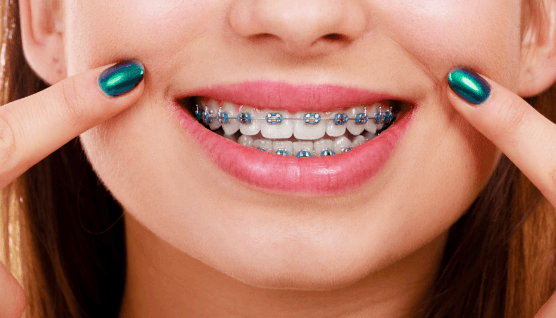
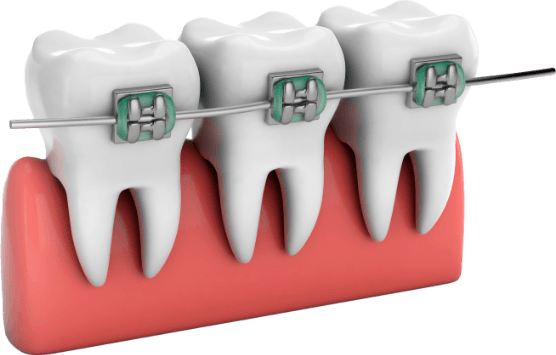
Metal braces remain one of the most effective tools in orthodontics for treating a wide range of crooked teeth cases — from mild crowding to complex bite corrections. Stainless steel brackets are bonded to the teeth and connected with an archwire that guides teeth into position over time. They’re highly durable, require no patient compliance beyond keeping appointments, and can address virtually any alignment issue with precision. Learn more about traditional braces.
Ceramic braces work exactly like metal braces but use tooth-colored brackets that blend with the natural shade of enamel. They offer the same clinical effectiveness with a more discreet appearance — a popular choice for teens and adults who want reliable results without the more visible look of metal. Learn more about clear ceramic braces.
Lingual braces are bonded to the backs of the teeth — completely out of sight from the front. They provide the precision of fixed braces with zero visible hardware, making them an appealing option for adults in professional or public-facing environments who want to be completely discreet about their treatment. Learn more about hidden braces.
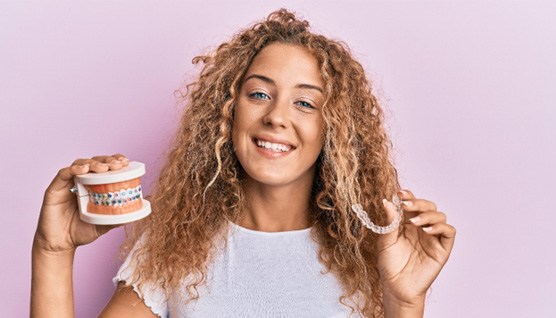
At Beyond Smiles Orthodontics, treatment for crooked teeth is never a one-size-fits-all prescription. Dr. Yelizar takes an artistic approach to smile design, considering not just how teeth align with each other but how they frame the face, support lip posture, and contribute to long-term oral health.
We serve patients from Rego Park, Forest Hills, Kew Gardens, Elmhurst, Corona, and across Syosset who are ready to address crooked teeth for the first time — or for the last time.
Your first visit to Beyond Smiles Orthodontics is a conversation, not a sales pitch. We’ll take digital scans of your teeth, review your bite and alignment, and talk through what we’re seeing in plain language. Dr. Yelizar will walk you through your options, explain the expected timeline and cost for each, and answer every question you have — without pressure and without rushing.
Our office is located at 63-109 Saunders St #BA2, Rego Park, NY 11374, easily accessible from throughout Syosset. We offer consultations for patients of all ages, and we welcome families treating multiple children at the same time.
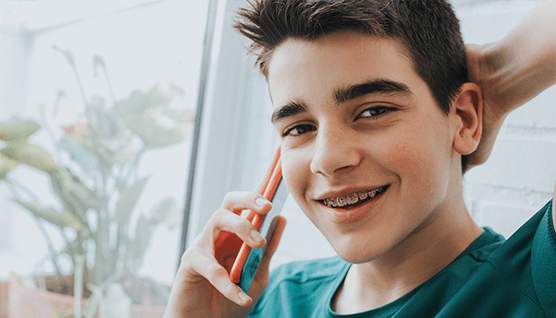
Crooked teeth are one of the most treatable orthodontic concerns we see. Whether you’re dealing with mild crowding or a more complex bite issue, there is a solution that fits your life. Contact Beyond Smiles Orthodontics to schedule your consultation. We’ll take a close look at your smile, explain exactly what we’re seeing, and show you what’s possible.

Here are the questions we hear most often from patients in Syosset who are exploring treatment for crooked teeth. If you need more information, please contact our office.
Both. Crooked teeth are harder to clean, which increases the risk of cavities and gum disease. Bite misalignment can cause uneven tooth wear, jaw strain, headaches, and chewing difficulty. The aesthetic concern is equally real — how you feel about your smile affects confidence and quality of life. Treating crooked teeth addresses both dimensions.
The American Association of Orthodontists recommends a first evaluation by age 7, though most active treatment begins between 11–14 when permanent teeth are in. That said, there is no age limit — many adults in their 30s, 40s, and beyond successfully correct crooked teeth. Earlier treatment is often more efficient, but adult treatment achieves the same results.
Yes. Teeth continue to shift throughout life due to chewing forces, soft tissue pressure, and natural jaw changes. Crowding in particular tends to worsen gradually over time. Addressing misalignment earlier is generally simpler and more stable than correcting teeth that have continued to drift.
It depends on the severity of the misalignment, the patient’s age, and their preferences. Braces — metal or ceramic — offer precise control for a wide range of cases. Clear aligners are an excellent option for mild to moderate misalignment in patients who prefer a removable, nearly invisible solution. Lingual braces work for those who want fully hidden fixed treatment. Dr. Yelizar will walk you through the best option at your consultation.
Yes, for many cases. Clear aligners have advanced significantly and can now treat a broad range of alignment issues — including moderate crowding, spacing, and some bite problems — that once required braces. Severe or complex cases may still be better suited to fixed braces, and Dr. Yelizar will give you an honest assessment of what aligners can achieve for your specific situation.
Treatment length depends on how much movement is needed, the patient’s age, and which appliance is used. Mild cases may take 12 months or less. Moderate to complex cases typically take 18–24 months. Dr. Yelizar will provide a projected timeline after evaluating your bite.
Many dental insurance plans include orthodontic benefits that can offset the cost of treatment for misalignment. Coverage varies widely by plan. Our team will review your benefits, explain exactly what’s covered, and help you maximize what you’re entitled to before treatment begins.
They can. When teeth don’t come together properly, the jaw muscles and joints compensate — sometimes leading to tension headaches, jaw soreness, clicking or popping in the TMJ, and facial discomfort. Correcting the bite often reduces or eliminates these symptoms, though severe TMJ issues may need additional evaluation.
We accept the vast majority of orthodontic insurance plans. Even if you don’t see your provider listed on our website, it’s worth calling our office to double-check your coverage. Orthodontic insurance can reduce your out-of-pocket expenses, after all, and you won’t have to worry about paperwork – we’ll handle your claims on your behalf.